Why Many Cosmetic Surgery Patients Panic During Normal Recovery — And What Actually Helps
After surgery, most patients expect recovery to feel like a steady, predictable improvement. Days go by, pain decreases, mobility increases, life gradually returns to normal.
For many international patients recovering in Thailand, the reality feels dramatically different. Recovery doesn’t feel linear. It feels uncertain, unpredictable, and often alarming—even when everything is medically normal.
Understanding why this anxiety happens and what triggers it helps you distinguish between real problems and the expected emotional turbulence of recovery.
The Paradox: Successful Surgery But Intense Anxiety
This is one of the most confusing parts of recovery for cosmetic surgery patients specifically: the surgery went perfectly, the surgeon confirmed everything looks great, yet many patients experience significant anxiety during recovery.
This anxiety isn’t a sign that something went wrong medically. It’s a predictable psychological response to the recovery experience itself.
Several factors compound to create this anxiety:
The shift from medical supervision to independence: Inside the hospital, medical staff observe your progress constantly. They see improvements you might not notice. They normalize what you’re experiencing. The moment you’re discharged, this external reassurance stops. You’re suddenly interpreting your own recovery without expert perspective.
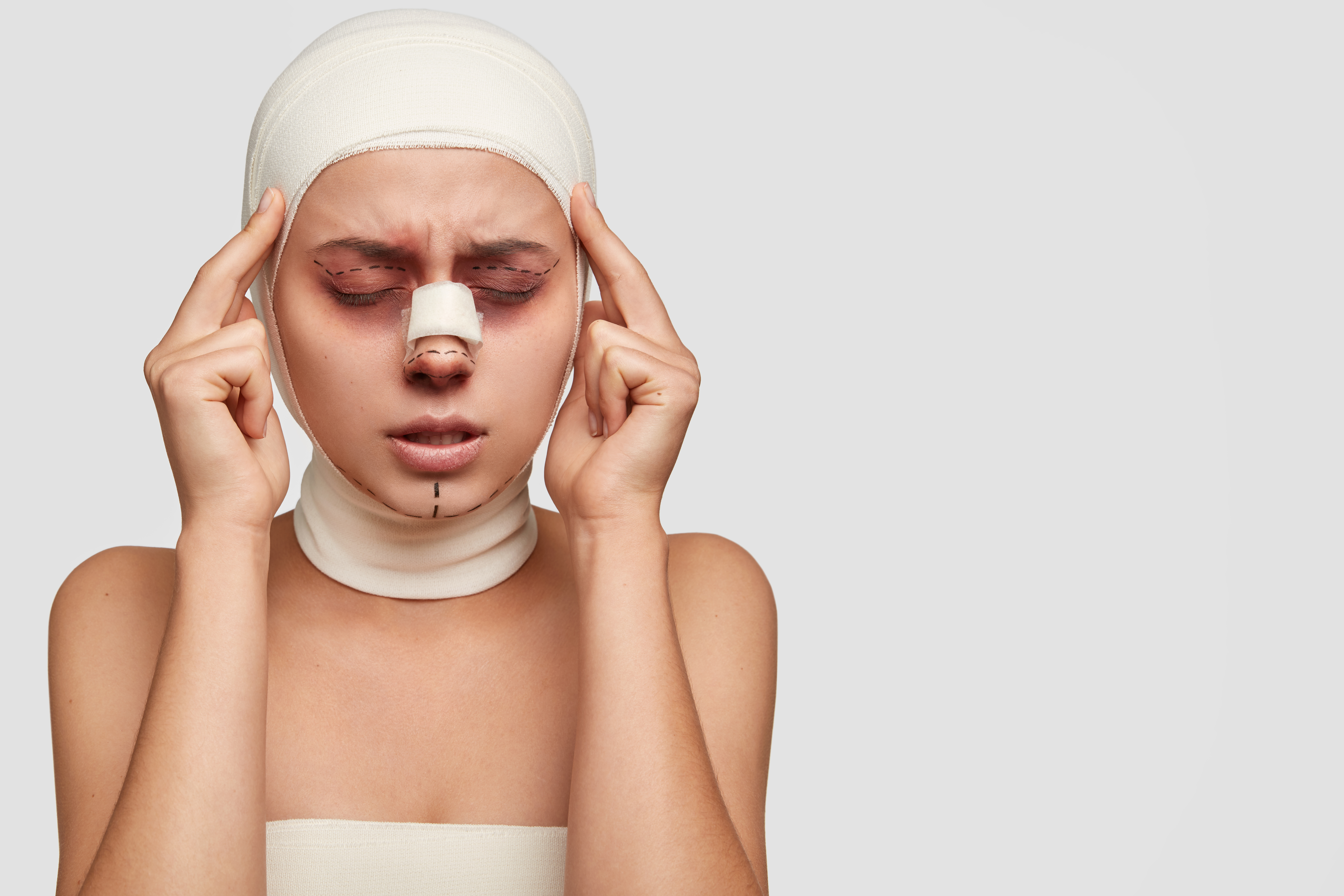
The visibility of recovery changes: Cosmetic surgery patients have a unique anxiety trigger that other surgical patients might not experience. Not only do they feel recovery—they see it. They look in the mirror multiple times daily. Every bruise, every bit of swelling, every asymmetry is visible. For procedure-specific anxiety (like facial surgery), you’re literally watching your appearance change in ways that might look worse before they look better.
High expectations colliding with messy reality: Cosmetic surgery is elective. Patients have chosen this and often have specific expectations about how they’ll look and feel after recovery. Real recovery—with swelling, bruising, asymmetry, and slow improvement—doesn’t match those expectations. The disappointment and surprise trigger anxiety.
Isolation of the international patient: Medical tourists in Thailand often recover in hotel rooms or recovery facilities alone. They don’t have family nearby to provide reassurance. They can’t call a friend who had the same procedure. They’re managing this emotional experience in solitude, which magnifies anxiety.
The Psychology Of Recovery Anxiety: Why The Brain Assumes Risk
Recovery anxiety is rooted in how your nervous system processes change and uncertainty during the post-operative period.
Your body is in a heightened state of sensitivity: After surgery, your nervous system is on alert. Pain, swelling, bruising, numbness, and fatigue all signal to your brain that “something is different.” The body is more sensitive to small changes—you notice sensations you’d normally ignore. This heightened awareness is partly protective (it helps you avoid activities that could harm healing) but it also amplifies anxiety.
Your brain naturally scans for threats: When your body is sending all these signals (pain, swelling, strange sensations), your brain interprets them through a threat-detection lens. “These sensations might mean something is wrong. I should be vigilant.” This is an ancient survival mechanism—when your body is injured, scanning for danger keeps you safe. But during planned surgical recovery, this mechanism creates excessive worry.
Uncertainty increases anxiety: Your brain can tolerate pain or discomfort if it understands why. But uncertainty—“I don’t know if this is normal, I don’t know if it’s dangerous”—triggers anxiety. Even though you had surgery and healing takes time, the lack of clear information about what you should expect creates cognitive dissonance. Your brain doesn’t like not knowing, so it generates worry as a way of staying vigilant.
Context is processed before you’re conscious of it: You see swelling that’s uneven. Your brain doesn’t just register “uneven swelling.” It unconsciously processes: “uneven could mean problem, uneven is abnormal, this might be danger.” Before you consciously think “this is probably normal,” your nervous system has already generated anxiety.
Common Panic Triggers During Cosmetic Surgery Recovery
Understanding what typically triggers anxiety helps you recognize these patterns without panic when they appear.
Swelling that appears uneven or asymmetrical: You wake up on day 3 and notice your right cheek is noticeably more swollen than your left. Or your right eye opening is smaller than your left. This immediately triggers concern—“something is wrong with one side.” In reality, uneven swelling is extremely common and temporary. It’s caused by gravity, sleeping position, individual healing patterns, and the fact that you were operated on one side or one area. But the visibility of asymmetry triggers panic in cosmetic surgery patients specifically.
Bruising that becomes darker before fading: You expected bruising to steadily fade. Instead, bruises become darker and more visible around day 2-4 before they start to fade. This worsening appearance feels like something has gone wrong. Medically, it’s the normal bruise reabsorption process. But cosmetically, seeing yourself look worse (not better) than immediately after surgery is deeply unsettling.
Changes in sensation or numbness: Nerve involvement in surgery can cause numbness, tingling, or unusual sensations in the surgical area or surrounding skin. These sensations can persist for days or weeks during healing. Patients panic—“I’ve damaged nerves! This numbness will be permanent!” In most cases, sensation returns as swelling decreases and nerves recover from surgical trauma.
Temporary increases in discomfort or pain: Recovery isn’t smooth pain reduction. Pain levels often vary—sometimes increasing temporarily due to activity, position changes, or inflammation. Patients interpret a day with increased pain as “I’m not healing properly” or “I did something that set back my recovery.” In reality, pain fluctuation is normal and doesn’t indicate problems.
Bruising or swelling that looks worse than you expected: Even if you intellectually understood that swelling and bruising would happen, seeing it is different from understanding it. Many patients are shocked by how visible and intense bruising can be after cosmetic surgery. Seeing yourself with black eyes or dramatic facial discoloration triggers genuine fear.
Asymmetry that feels permanent: You notice that one eye opens wider than the other, or one side of your face looks different than the other. This feels like a permanent problem—“the surgeon made a mistake” or “I’m going to look asymmetrical forever.” In reality, asymmetry during healing is extremely common and usually resolves as swelling decreases and tissue settles.
Slow improvement that feels like it’s stalling: You feel noticeably better days 1-7. Then days 8-14, improvement feels slower. You start worrying—“is healing stopping? Am I supposed to feel better by now?” This slow improvement is actually normal—most dramatic improvement happens in the first week. Improvement weeks 2-4 is slower but still happening. But the psychological expectation of continued rapid improvement makes slower progress feel alarming.
The Difference Between Feeling Anxious And Actually Having A Problem
This is the critical distinction that reduces panic:
Feeling uncertain does not mean something is wrong. Anxiety is an emotional experience, not a medical assessment. You can feel scared and have everything be healing perfectly normally. Conversely, you might feel fine while having an early complication (though this is less common—most complications cause actual symptoms, not just feeling).
Recovery often includes phases that look worse before they look better. This is especially true with cosmetic surgery. Swelling peaks day 3-4. Bruising darkens days 2-5. The appearance of one side might be uneven until swelling decreases. These phases are expected and normal. Understanding this intellectually is different from experiencing it emotionally—but knowing these phases are standard helps you tolerate the appearance while it’s happening.
Normal recovery includes sensations that feel abnormal. Numbness is not comfortable. Tightness is not pleasant. Unusual sensations (tingling, “electric” sensations as nerves recover) are strange. But these are normal parts of healing, not complications. The discomfort is temporary.
Understanding the timeline reduces anxiety. Knowing that swelling peaks around day 3, improves noticeably by day 7, and continues improving for weeks helps you interpret what you’re seeing. On day 4, seeing swelling that peaked yesterday might feel like a problem until you remember “day 4 is normal—swelling doesn’t start noticeably improving until day 7.” That knowledge converts fear into patience.
Why Context and Clarity Reduce Anxiety Dramatically
Patients who understand recovery patterns—what’s expected, what’s normal, what’s concerning—tend to experience less anxiety.
This isn’t because they’re calmer people. It’s because their brain has context for interpreting the changes they’re observing. Instead of “change = possible danger,” they’re processing “this specific change = normal part of week 2 recovery = expected = nothing to worry about.”
Understanding replaces guessing. Instead of guessing “is this normal?” you know “yes, uneven swelling is normal during week 2 and resolves as swelling decreases.”
Knowledge replaces helplessness. Instead of feeling like things are happening to you that you don’t understand, you understand the process and can see how you’re progressing through it.
Reassurance becomes self-generated rather than external. Instead of needing a surgeon to reassure you, you can reassure yourself with understanding: “I know this is normal because I understand the recovery timeline. I know this will resolve because I understand how healing works.”
Decisions become clear. Instead of every symptom being potentially concerning (“should I call the surgeon?”), you have clear criteria: “this symptom is normal and I should monitor it; this symptom warrants a call; this symptom requires immediate evaluation.”
Managing Anxiety Without Dismissing It
Anxiety during recovery is real and valid. It’s not “just in your head.” It’s a genuine psychological response to an unusual situation.
But managing anxiety doesn’t mean waiting it out alone. It means:
Getting personalized context: Understanding what’s expected for YOUR specific procedure, YOUR recovery timeline, YOUR situation. Generic information helps, but personalized assessment is more powerful.
Creating a monitoring framework: Knowing what to check daily, what constitutes normal variations, and what warrants concern. This converts passive anxiety into active, structured monitoring.
Having a clear escalation path: Knowing exactly when to contact your surgeon, what to tell them, and understanding that asking questions is appropriate. Many patients suffer silently because they don’t know if their concern is “serious enough” to mention.
Separating medical reality from emotional experience: Understanding that anxiety is not a symptom—it’s an emotion. And emotions don’t always reflect medical reality. You can feel terrified while healing normally.
Building confidence through progress documentation: Taking photos, keeping notes, tracking improvement. When anxiety spikes, looking at day 1 photos compared to day 7 provides objective reassurance that healing is progressing.
If You’re Experiencing Anxiety During Recovery
If you’re recovering after cosmetic surgery and feeling anxious—whether about specific symptoms, about the timeline, about whether things are “normal,” or just about managing the recovery process—this is completely normal.
Most recovery anxiety is driven by uncertainty, not by actual complications. Getting clarity about what to expect, what’s normal, and what requires action—tailored to your specific procedure and situation—transforms anxiety into manageable recovery.
Whether through a written Recovery Clarity Brief delivered within 24 hours, or a 30-minute private consultation where you can discuss your specific concerns, getting this clarity helps you move through recovery with confidence rather than fear.
You don’t have to manage recovery anxiety alone.
Still unsure what to do next?
Book a 30-minute decision session. Non-medical. Independent. Focused on helping you think clearly about your next steps.
Medical Disclaimer: This article provides general information only and is not medical advice. Always consult with qualified healthcare professionals for medical decisions. ThaiNurse provides non-medical decision support services.